In short
Showrooms must show products accurately, support client meetings and adapt as ranges change. How to plan recessed downlights for showrooms.
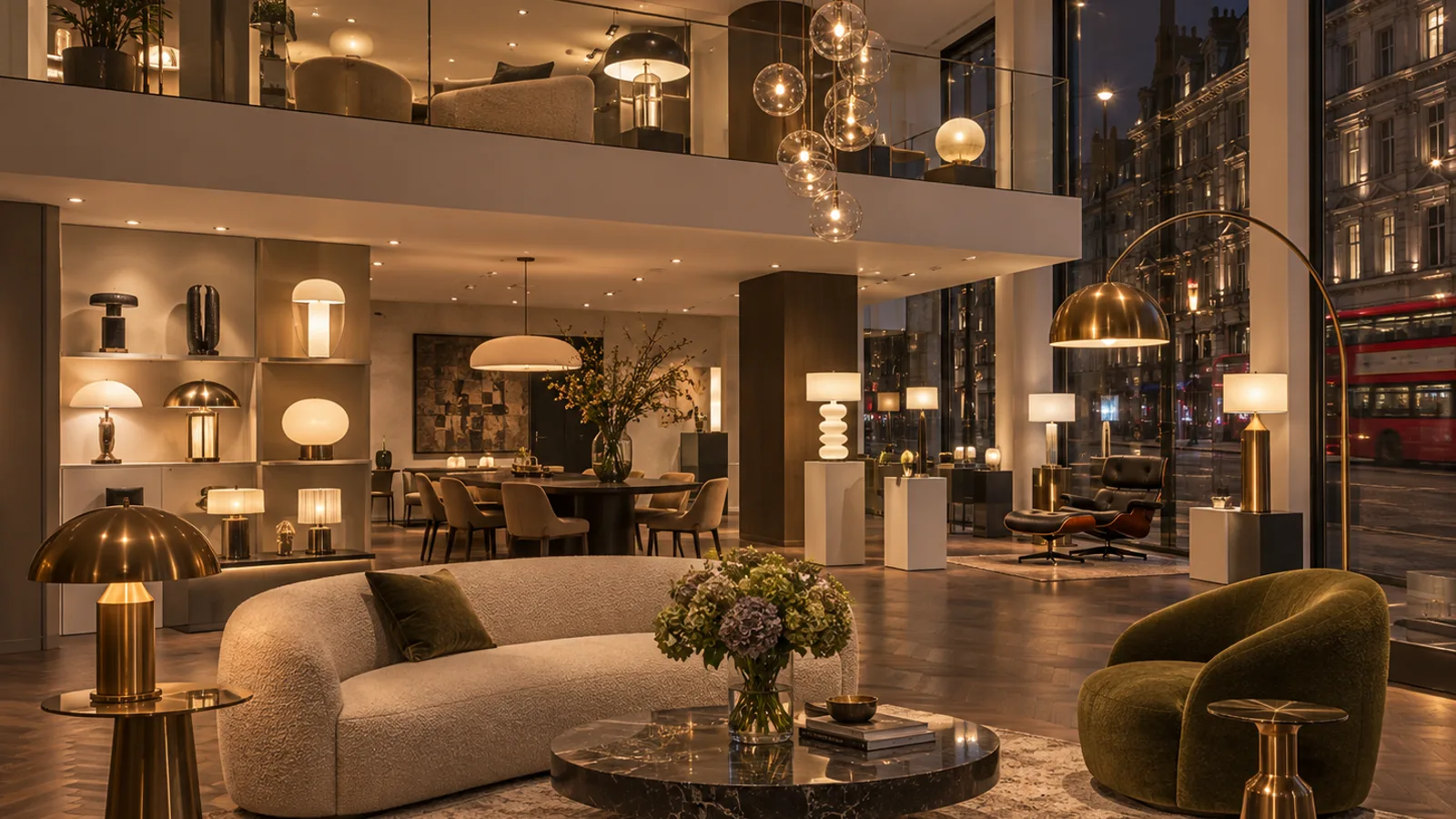
Clients visit a showroom to see finishes, colours and materials in person, so the lighting has a direct effect on how products are judged. BS EN 12464-1 sets lighting requirements for indoor workplaces, including areas where staff work at desks, but a good showroom scheme goes further, using light to create focus and show materials accurately.
Showrooms are a particular kind of commercial space. They need to show products at their best, support conversations with clients and adapt as ranges change. This guide looks at how recessed downlights can do that, whether the showroom sells furniture, kitchens, bathrooms, flooring, cars or fit-out materials.
What a showroom asks of its lighting
A good showroom scheme does several jobs at once:
- Show products accurately, so colours and materials look as they will on site
- Create focus, drawing the eye to key pieces
- Stay flexible, as displays move and ranges change
- Support meetings, with comfortable light at tables and sample areas
- Keep the ceiling calm, so attention stays on the products
Recessed downlights suit this well because they keep the ceiling clean and put light where it is needed.
Layers in a showroom
| Layer | Purpose | Recessed approach |
|---|---|---|
| General light | Comfortable background level | Low-glare downlights on a regular grid |
| Accent light | Highlight hero products | Adjustable downlights with narrow beams |
| Wall light | Light walls, samples and graphics | Wall-wash downlights or recessed linear |
| Meeting areas | Faces and documents | Dimmable downlights over tables |
| Circulation | Lead visitors through the space | Spaced downlights along routes |
Accurate colour
In a showroom, clients judge finishes, fabrics and timber by eye. High colour rendering helps materials look natural. Check the data for the full range of colours, not only the headline figure, and keep colour consistent between fittings. Our guide to CRI for recessed lighting explains what to look for.
Colour temperature sets the mood. Warm white often suits furniture and residential products, while neutral white can suit technical or commercial ranges. Keep colour temperature consistent within each zone. See colour temperature for recessed lighting.
Flexibility for changing displays
Displays change often. Recessed downlights can still be flexible:
- Adjustable downlights tilt and rotate to follow products as they move. See adjustable recessed downlights
- Interchangeable optics change beam angle without replacing the fitting. See multi-optic downlights
- Controls allow scenes for opening hours, events and cleaning. See recessed lighting controls
Where layouts change very often, combine recessed general lighting with track over key display zones. For flush track and spot options, see 299 Lighting downlights.
Beam angles and contrast
Contrast creates focus. A hero product lit more brightly than its surroundings stands out, while even light everywhere can look flat. Narrow beams pick out individual pieces, and wider beams suit general light and larger displays. See beam angles explained.
Glare and comfort
Visitors look up at ceilings, displays and tall products. Deep-set optics and good shielding keep glare down. Where staff work at desks, consider the requirements in BS EN 12464-1, which recommends a UGR limit of 19 for office tasks. See glare and UGR.
Showroom ceilings
Showrooms are often in former warehouses, ground-floor units or historic buildings, so ceiling types vary:
- Plasterboard ceilings suit most downlights. See recessed lighting in plasterboard
- Grid ceilings are common in commercial units. See recessed lighting in grid ceilings
- Shallow voids need low-profile fittings. See ceiling void depth
- Exposed soffits may suit pendants or surface fittings instead. See suspended lighting for exposed ceilings
For a seamless, plastered-in finish, see trimless lighting for retail.
Meeting and sample areas
Showrooms are places for conversations. Tables where clients review samples, drawings and price lists need comfortable, even light with good colour rendering. Dimmable downlights let staff soften the light for longer meetings. Light faces as well as table tops, so conversations feel natural.
Energy and running hours
Showrooms are often lit for long hours, including evenings and weekends. Efficient LED downlights and good controls reduce running costs. Presence detection can dim back areas and stores when they are empty. For general guidance, see sustainable downlights and TM65/TM66.
Practical checklist
- Agree which products are the focus, and how often displays change
- Specify high colour rendering and a consistent colour temperature
- Use adjustable or multi-optic downlights over display zones
- Plan scenes for opening hours, events and cleaning
- Check ceiling type, void depth and access before choosing fittings
- Plan emergency lighting with the main scheme. See emergency lighting with recessed downlights
Retail and reception spaces
Many showrooms combine sales floors with receptions, cafés and offices. For related guidance, see recessed lighting for retail, reception lighting design and recessed lighting for hospitality. For linear details along display walls, see linear-led.com on retail linear lighting.
Windows and street frontage
Many showrooms have large windows onto the street. After dark, the interior becomes the display, so light the back walls and key products, not only the floor. By day, daylight near the glazing can be balanced with dimming, so the interior does not look dull behind bright windows.
How 299 Lighting can help
299 Lighting supplies recessed lighting and downlights for showrooms and retail projects, with bespoke solutions and project support from layout to installation. Send us your drawings to start.
Further reading at 299 Lighting
Next steps on recessedlighting.co.uk
Planning a recessed scheme?
Send us your reflected ceiling plan. We'll come back with a product shortlist, ceiling cut-out details and lighting calculations.
Start a project →Frequently asked questions
What is the most important thing in showroom lighting?
Showing products accurately, with high colour rendering, consistent colour temperature and focused accent light on key pieces.
Why use recessed downlights in a showroom?
They keep the ceiling calm and put light where it is needed, so attention stays on the products.
How do you keep showroom lighting flexible?
Use adjustable or multi-optic downlights over display zones and controls with scenes, and add track where layouts change often.
What colour rendering do showrooms need?
High colour rendering helps materials and finishes look natural. Check the data, not only the headline figure.